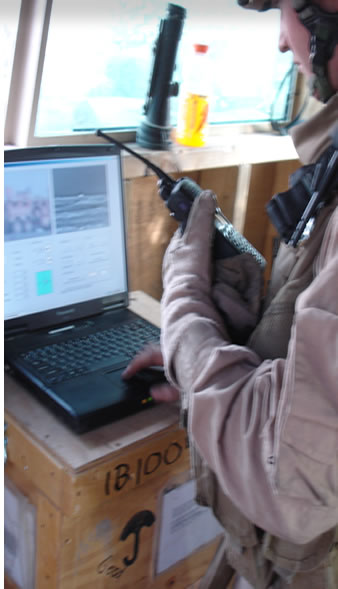
MIL-STD-810F is an extremely comprehensive document providing test procedures intended to verify the environmental design and performance of material and equipment proposed for use by any Department or Agency of the DoD. No fewer than 24 categories of test procedures are discussed, with numerous application-specific variations of each category. For instance, the test procedure for vibrational loads considers four distinct life phases (manufacture, transport, operational, supplemental) with 11 platforms (truck, trailer, ship, aircraft, etc.) and 25 application categories. This means that for a claim of “MIL-STD-810F Compliant” to have any real meaning, the specific portions of the mil-standard that are applicable must be defined and explained.
The intent of the Standard is to provide guidance for development of specific test procedures to ensure that material procured by the DoD will perform properly in the proposed application. It would be extremely costly and of little value to “certify” a piece of equipment to all of the test procedures in order to claim a blanket MIL-STD-810F “approval” or “compliance.” Rather, the real value is in testing rigorously to the applicable conditions expected in the actual operational life of the equipment.
Some vendors attempt to claim ‘MIL-STD-810F Approved’ on their marketing materials, but these claims mean nothing unless 1) the specific, applicable portions of the standard are described, 2) the test methods used to verify these claims are disclosed, and 3) the test data is provided. IEC Infrared Systems (IEC) will provide all three of these pieces of information for any of its systems to any qualified customer. All customers should approach claims of ‘MIL-STD-810F Approved’ cautiously, making sure to understand the specific portions of MIL-STD-810F being claimed, the vendor or manufacturer’s test methodology, and the actual test results.
Contact us today for more information about our Thermal Imaging Systems.